Wavelength Pearls
Ultrasound-guided nerve blocks.
Ultrasound-guided regional anaesthesia for pain in the emergency department.
Ultrasound-guided regional anaesthesia gives targeted pain relief for fractures, wounds and dislocations, with less need for opioids and procedural sedation. These pearls describe the anatomy, the probe position and the target for each block used in emergency care.
They cover the femoral nerve, infra-inguinal and supra-inguinal fascia iliaca and PENG blocks for hip fractures, serratus anterior plane and erector spinae plane blocks for rib fractures, rectus sheath, greater occipital, superior trunk and SHAC blocks, and the median, ulnar, radial and digital nerve blocks for the hand. Follow your local guidance on training, monitoring and local anaesthetic doses.
14 pearls
One technique at a time.
Nerve blocks
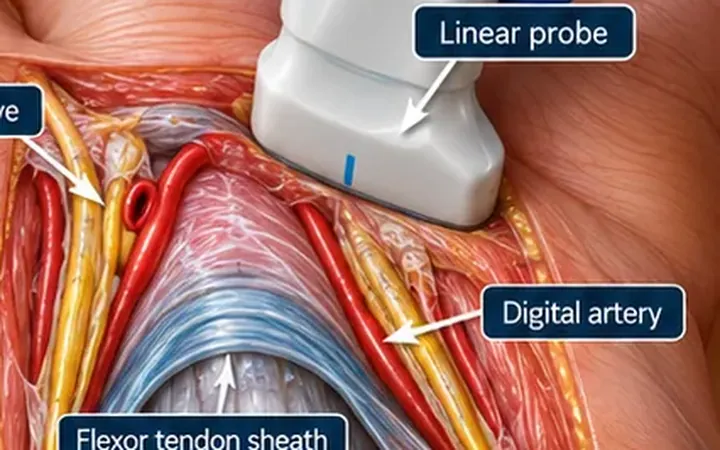
Digital nerve block: block the base, one deposit on each side
A digital nerve block numbs a finger for a laceration, a nail bed repair or a reduction. The palmar digital nerves run on each side of the flexor tendon sheath. Place a small deposit beside each one, and use ultrasound to see them.
Nerve blocks
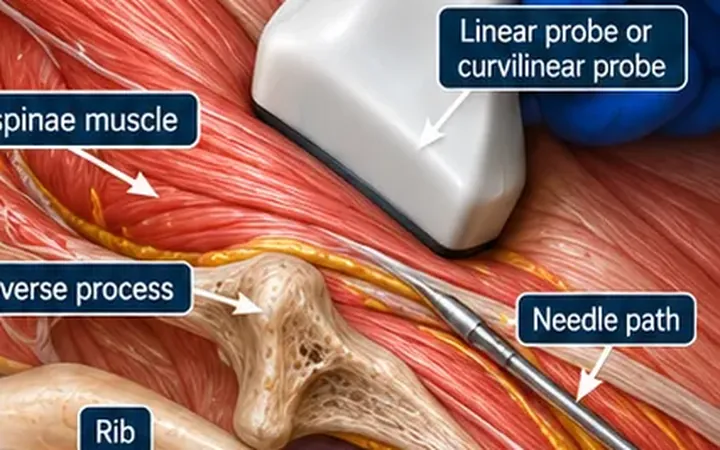
Erector spinae plane block: bone, muscle, then flood the plane
The erector spinae plane block places local anaesthetic on the transverse process, under erector spinae, far from the pleura. Find the flat-topped transverse process, lift the muscle off it and watch the fluid spread up and down.
Nerve blocks
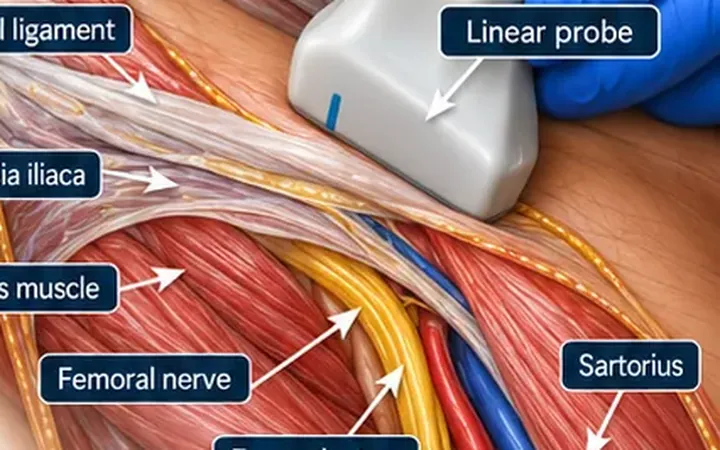
Fascia iliaca block, infra-inguinal: find the fascia, then flood the plane
The classic emergency department block for a fractured hip. Find fascia iliaca lying on iliacus, lateral to the femoral nerve, and fill the plane with a larger volume so it spreads across to the nerves of the thigh.
Nerve blocks
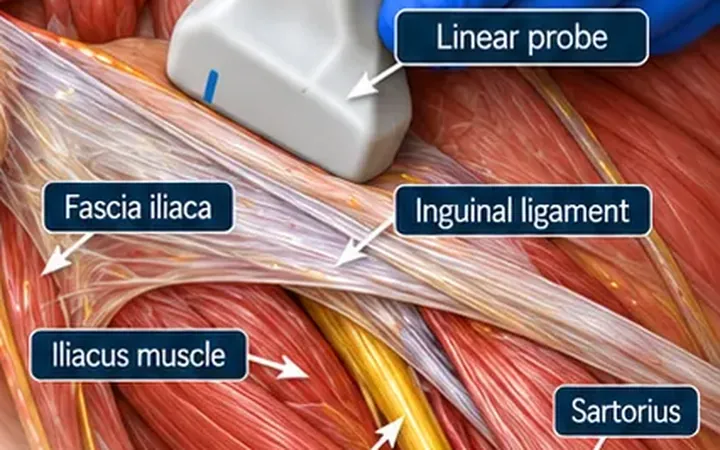
Fascia iliaca block, supra-inguinal: go above the ligament for better spread
The supra-inguinal approach places the local anaesthetic under fascia iliaca above the inguinal ligament, where it spreads up towards the lumbar plexus and reaches the lateral femoral cutaneous nerve more reliably. Find iliacus in a sagittal view near the anterior superior iliac spine and watch the fluid travel towards the head.
Nerve blocks
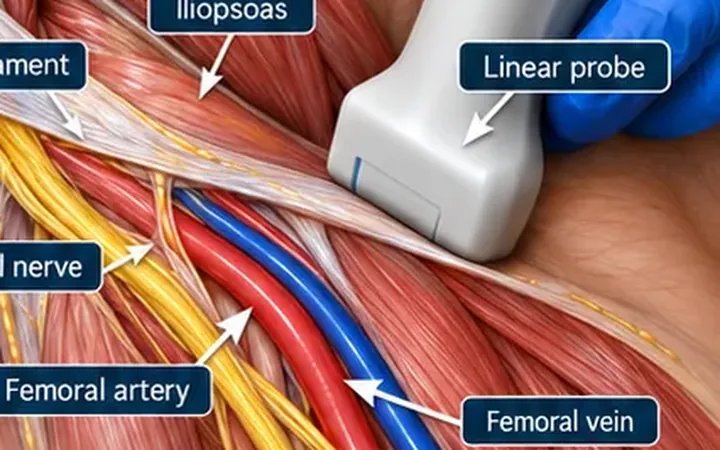
Femoral nerve block: artery first, nerve next, then wrap it
A femoral nerve block numbs the front of the thigh, most of the femur and the front of the knee. Find the femoral artery, slide lateral to the nerve under fascia iliaca, and watch the local anaesthetic surround it.
Nerve blocks
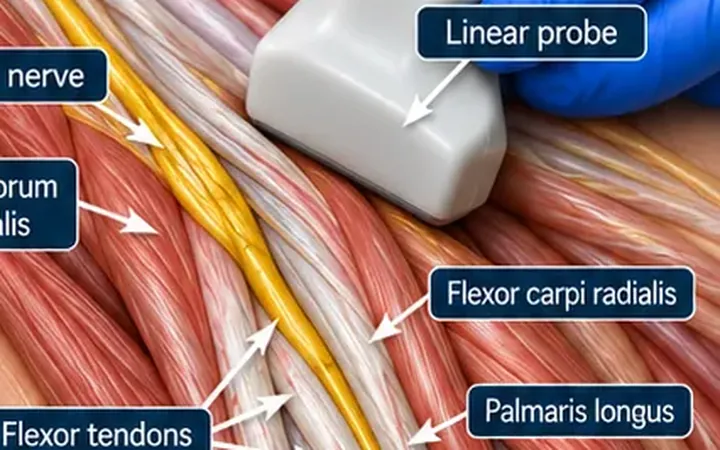
Median nerve block: find the fascicles, then build a soft halo
A forearm median nerve block numbs the palm on the thumb side and the index and middle fingers. Find the honeycomb nerve between the finger flexors in the mid to distal forearm, and surround it with a small volume.
Nerve blocks
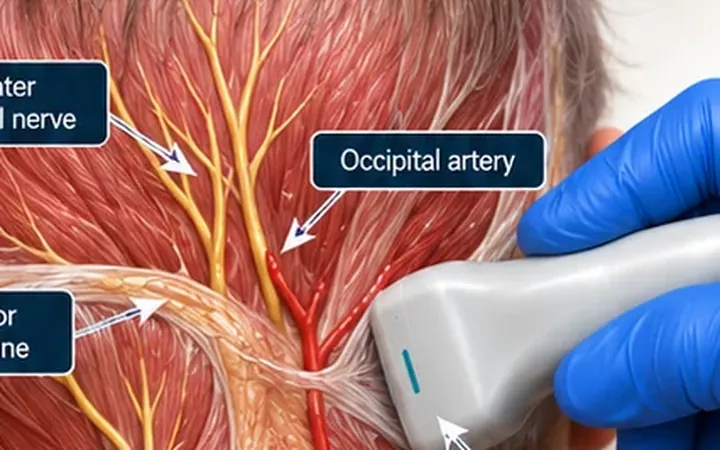
Occipital nerve block: follow the artery, then find the nerve
The greater occipital nerve runs beside the occipital artery at the back of the head. Colour Doppler finds the artery in seconds, which turns a blind injection into a targeted one. Rule out a dangerous headache first.
Nerve blocks
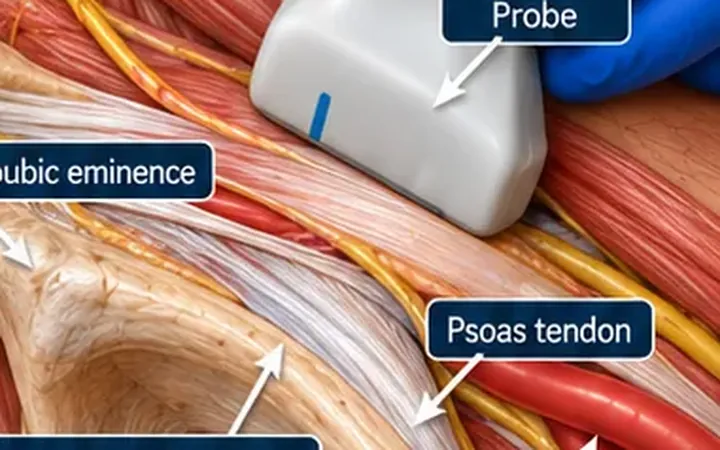
PENG block: find the ramus, then lift the tendon
The pericapsular nerve group block targets the small nerve branches to the front of the hip joint, where the psoas tendon crosses the pubic ramus. It relieves hip fracture pain on movement and tends to spare the quadriceps.
Nerve blocks
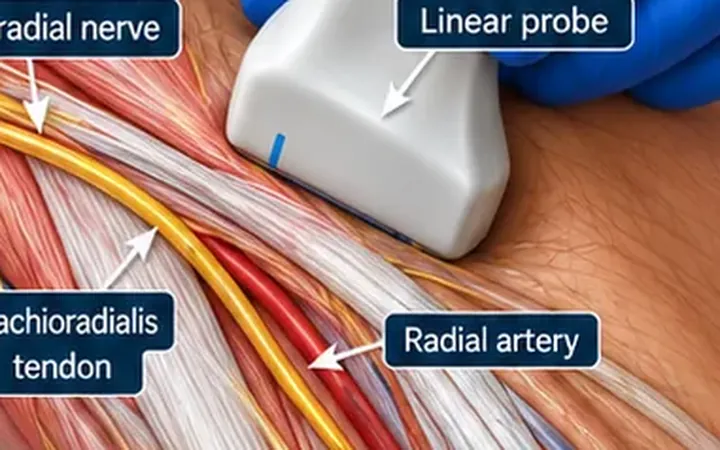
Radial nerve block: stay lateral, follow the nerve beside the artery
The superficial branch of the radial nerve supplies the back of the hand on the thumb side. In the forearm it runs beside the radial artery under brachioradialis. Use light pressure, find the artery, and look lateral for a small nerve.
Nerve blocks
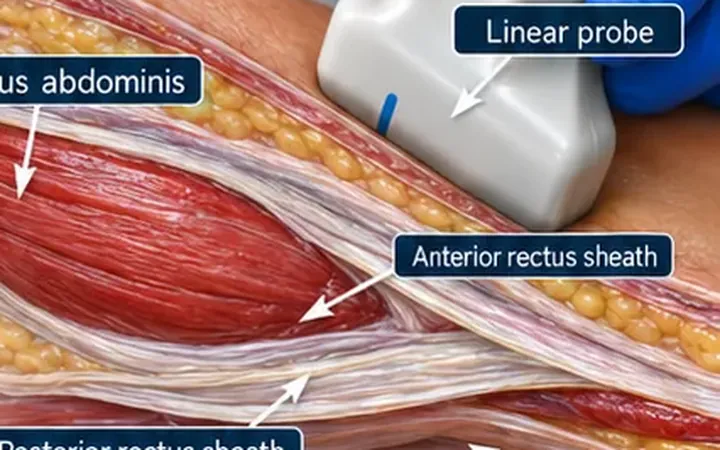
Rectus sheath block: behind the muscle, in front of the sheath
A rectus sheath block numbs the skin and muscle of the central abdominal wall. Place the local anaesthetic behind rectus abdominis, in front of the posterior sheath, on both sides for a midline wound.
Nerve blocks
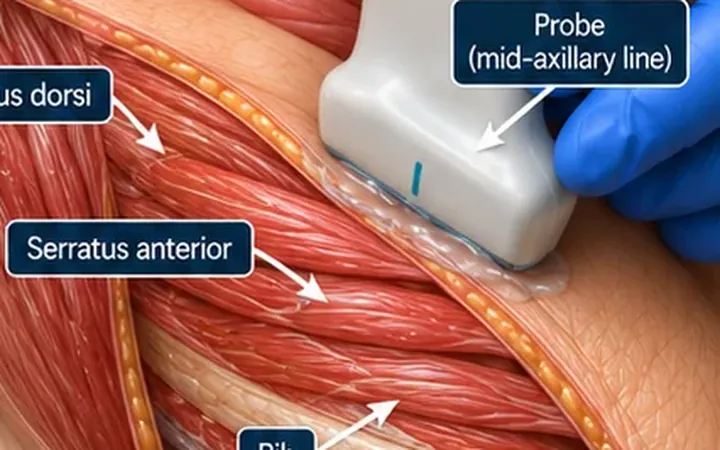
Serratus plane block: see the rib, see the pleura, then open the plane
Rib fractures hurt every time the patient breathes or coughs. A serratus anterior plane block numbs the side of the chest wall. Find the rib and the pleura first, and use the rib as your backstop.
Nerve blocks
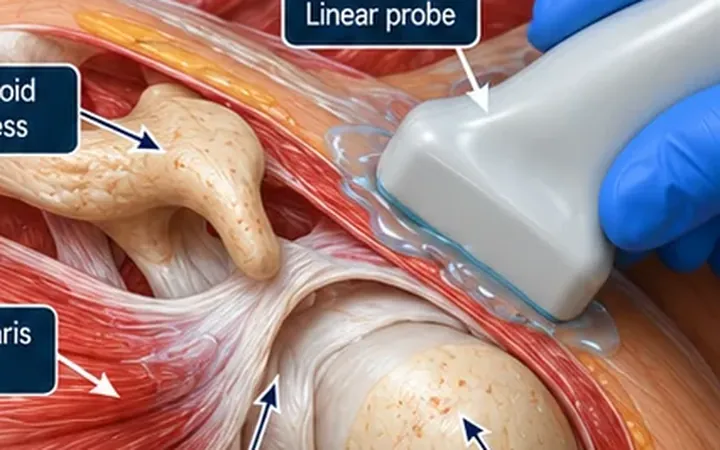
SHAC block: block the capsule, not the neck
The shoulder anterior capsular block places local anaesthetic on the front of the shoulder joint, away from the brachial plexus and the phrenic nerve. Stay lateral to the coracoid, find the subscapularis, and spread along the capsule.
Nerve blocks
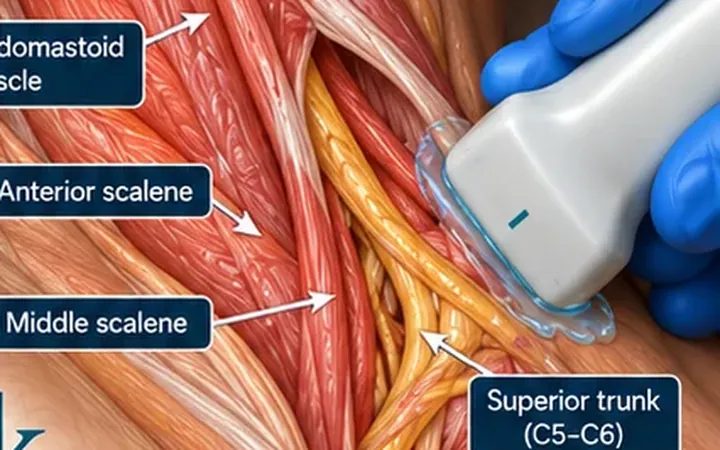
Shoulder reduction: low-volume superior trunk block
Trace the C5 and C6 roots down the neck until they join as the superior trunk, then surround it with a few millilitres of local anaesthetic. It numbs the shoulder for reduction with less risk to the diaphragm than an interscalene block.
Nerve blocks
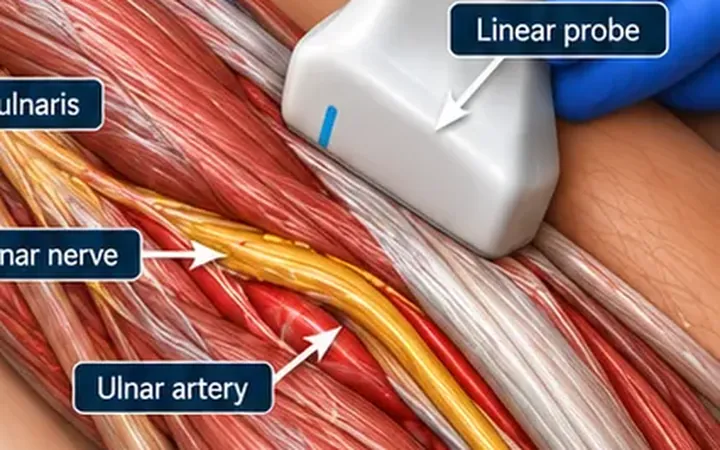
Ulnar nerve block: find the artery first, then block its neighbour
A forearm ulnar nerve block numbs the little finger side of the hand. Find the ulnar artery, the nerve lies on its ulnar side under flexor carpi ulnaris. Go a little higher in the forearm and the two separate.
Practise it with us
One instructor to every four or five delegates, FAMUS-accredited instructors and RCEM-approved ultrasound supervisors, and long, supervised time on the probe.
Newsletter
Get the next one by email.
One email a week: a practical scanning skill, new Learn posts and course dates before they go public.