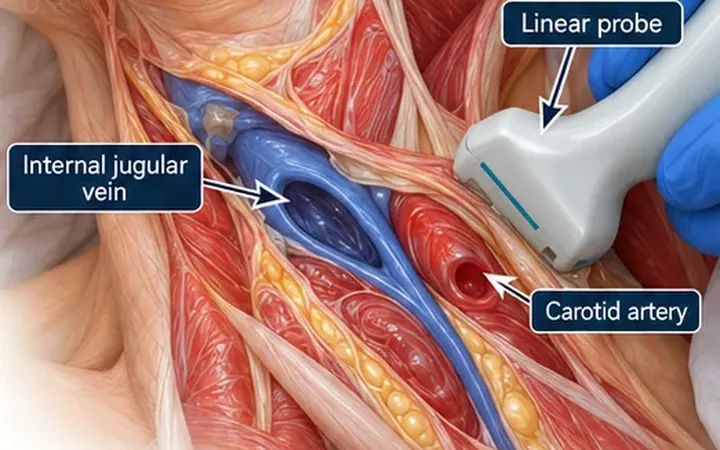
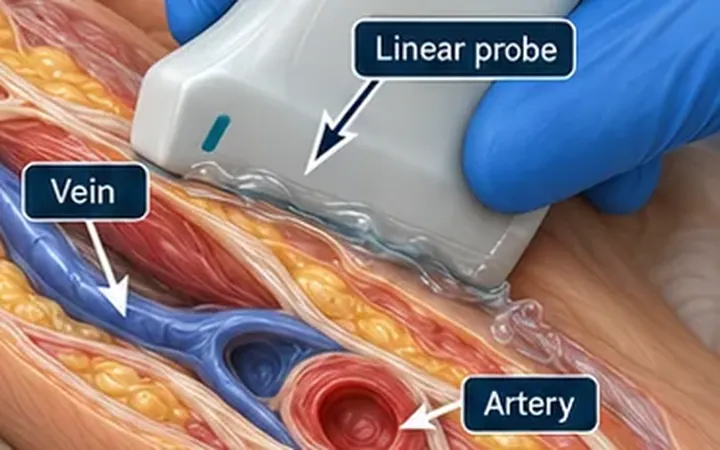
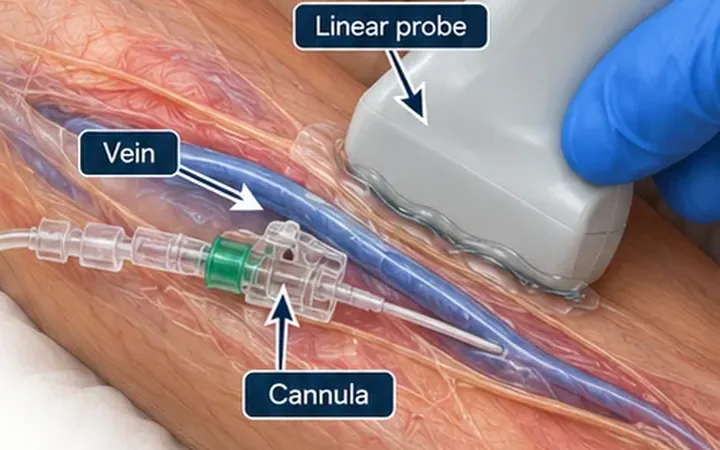
When the veins look poor, the limb is often the problem, not your needle skill. A cold, raised arm with no tourniquet holds small, flat veins. Fill them first and the same patient may have a good target.
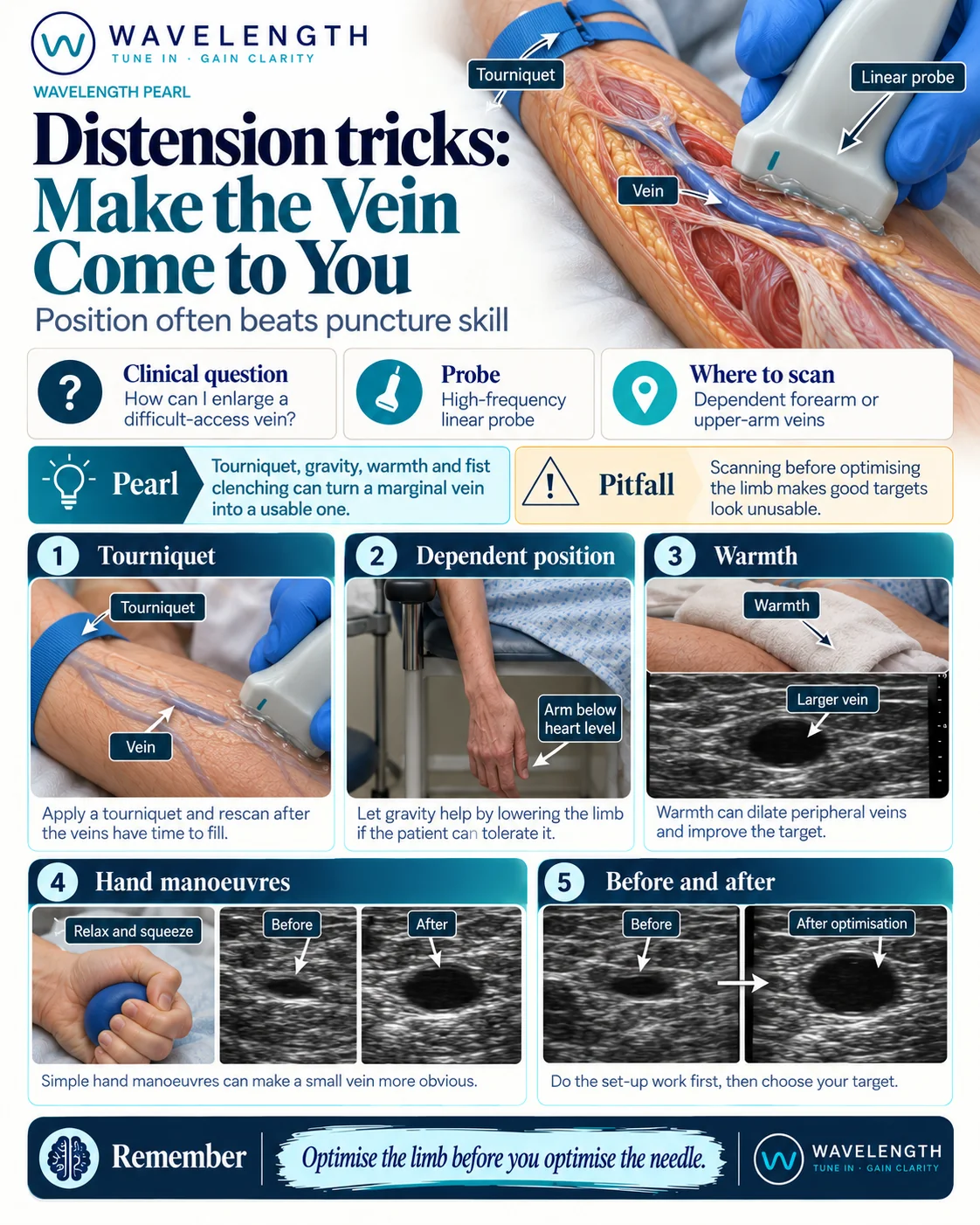
Scan images in the graphic are illustrations, not patient scans.
Fill the vein before you scan
- Tourniquet. Apply it above the site, then wait while the veins fill before you rescan. Release it as soon as the cannula is in, or sooner if the patient has pain or the hand becomes dusky.
- Dependent position. Lower the arm below heart level, as far as the patient tolerates, so gravity helps the veins fill.
- Warmth. A warm towel or warm pack over the limb dilates the peripheral veins.
- Hand movements. Ask the patient to squeeze a ball or clench the fist, then relax. A relaxed hand and a filled vein are easier to enter.
- Rescan. Look at the same vein again once the limb is optimised, then choose the target.
Reading the view
- Before. A small, flat vein that looks too thin to use.
- After. The same vein rounder and larger, with a clear lumen and more room for the needle.
Safety points
- Follow your trust's policy on limbs to avoid, such as an arm with a dialysis fistula or after lymph node clearance, and on any limb with a previous injury.
- If you take blood for a potassium result through the same procedure, prolonged fist pumping can falsely raise the result. Ask the patient to squeeze and relax a few times, not to pump repeatedly.
- Warmth must be comfortable, never hot. Check the skin, especially in patients with reduced sensation.