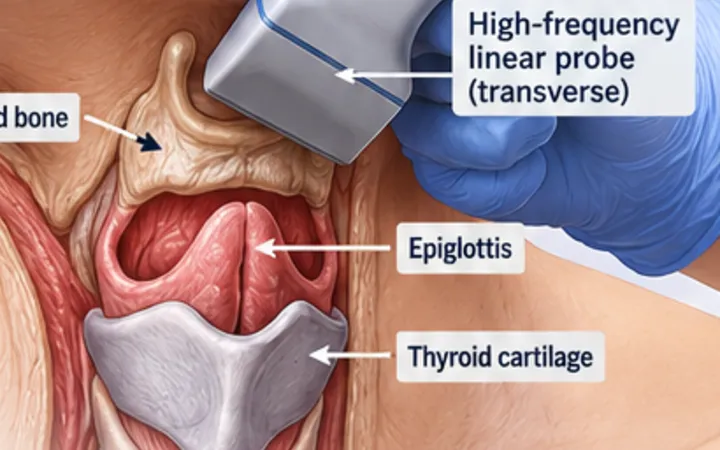
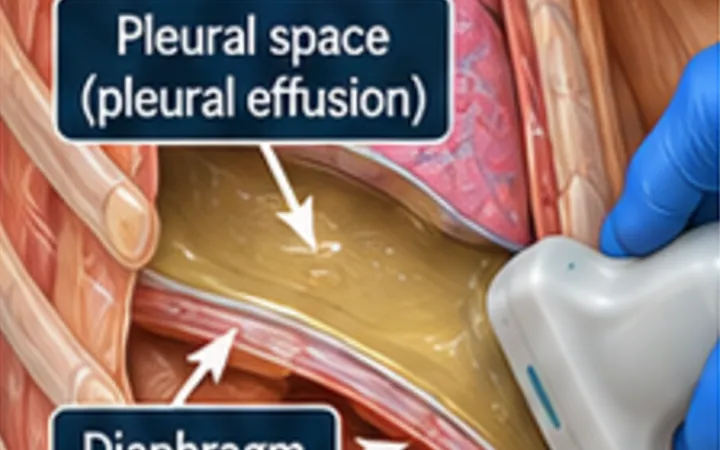
B-lines are bright vertical lines which start at the pleural line, reach the bottom of the screen without fading, and move with lung sliding. They tell you the lung under the probe has lost some of its air. They do not tell you why. The pattern and the pleural line do.
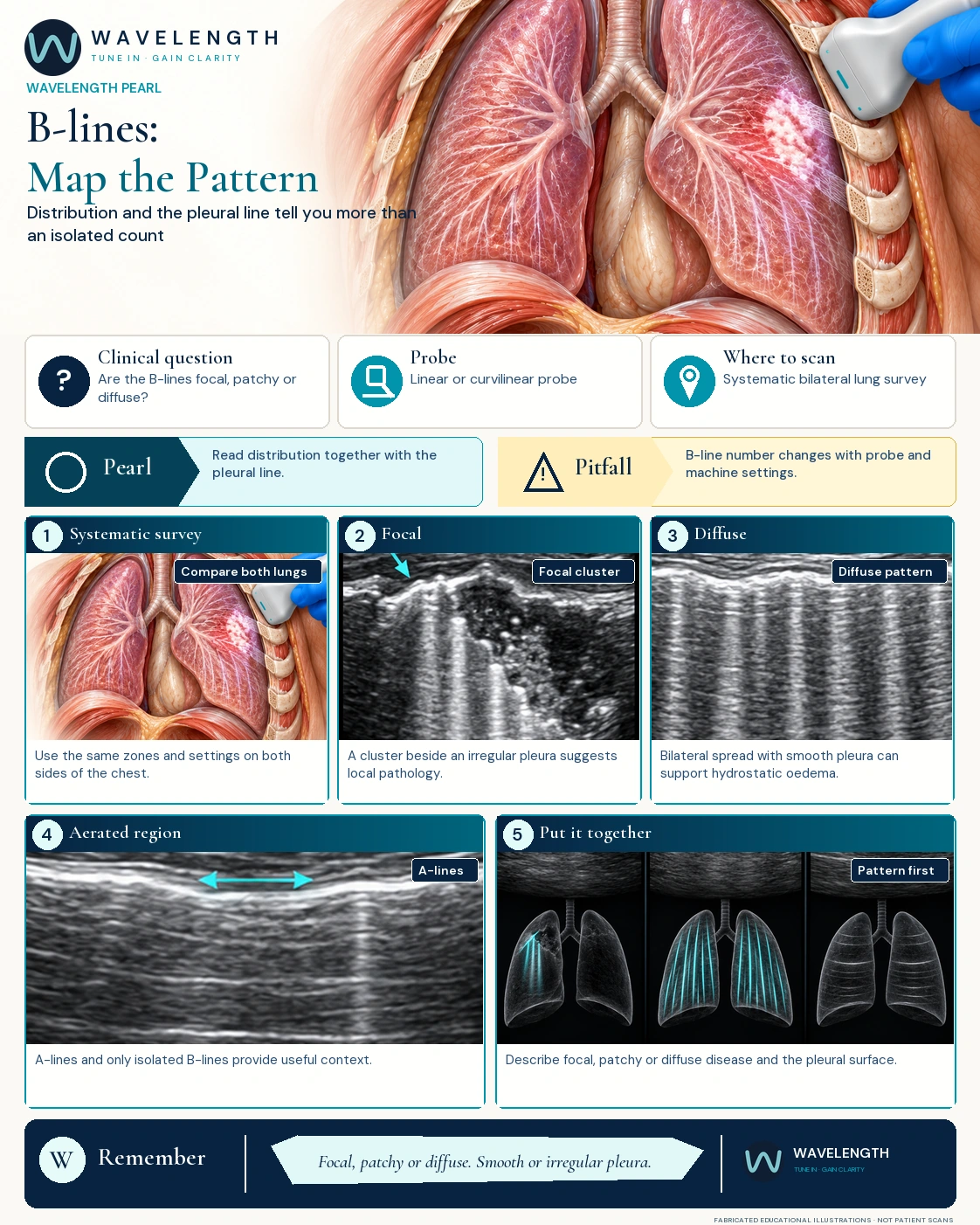
Scan images in the graphic are fabricated educational illustrations, not patient scans.
The scan
- Scan both sides of the chest in the same zones, not one striking interspace.
- Keep depth, focus and gain sensible. Settings change how many B-lines you see.
- In each zone, record whether B-lines are absent, focal, patchy or diffuse.
- Look at the pleural line: smooth or irregular, continuous or broken.
- Look for small consolidations under the pleura, spared areas, effusion and moving air bronchograms.
Reading the pattern
- Diffuse B-lines on both sides with a smooth pleural line support cardiogenic pulmonary oedema in the right setting.
- Focal B-lines next to an irregular pleura or a small consolidation suggest a local cause such as pneumonia, contusion or infarction.
- Patchy B-lines on both sides, with spared areas and an irregular pleura, fit inflammatory lung injury, though the patterns overlap.
Action
Put the lung pattern together with the history, the examination, a focused heart scan and any earlier imaging. If you are following treatment, repeat the same zones with the same settings.